
Dental Crowns
Protect and Restore Damaged Teeth
When a tooth becomes weakened, cracked, heavily filled, or worn down, a dental crown can help restore its strength, appearance, and function. Designed to fit over the entire visible portion of the tooth, a crown acts like a protective outer layer that helps reinforce and preserve the tooth underneath.
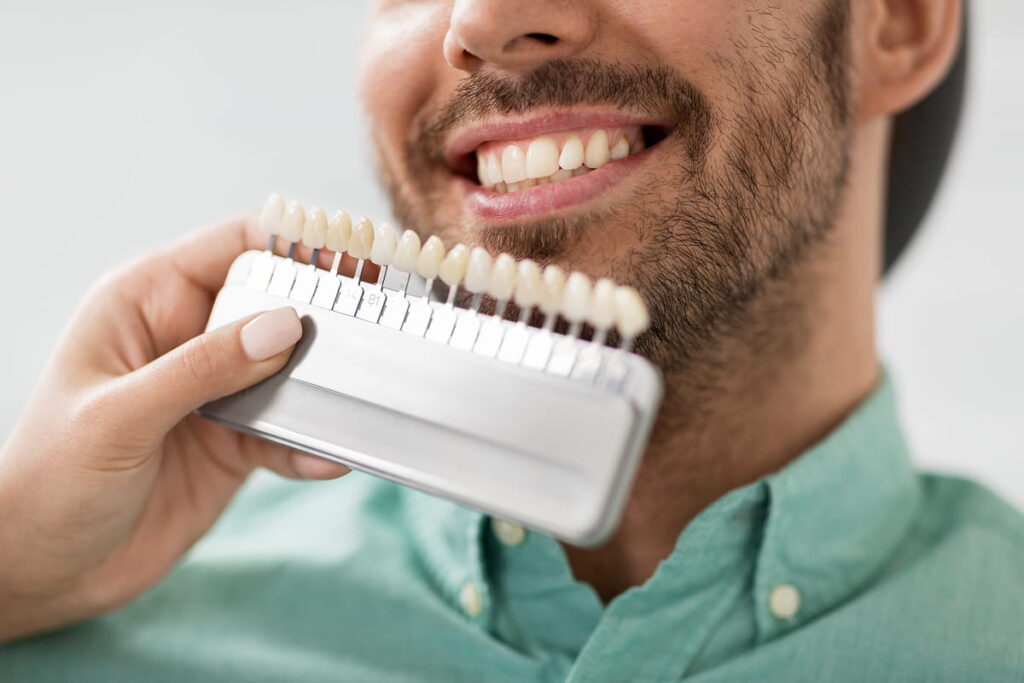
Custom-made to match the colour and shape of your natural teeth, crowns are designed to blend seamlessly into your smile while feeling comfortable and secure.
When Is a Dental Crown Recommended?
Dental crowns are often used to protect teeth that can no longer safely support a regular filling on their own.
A crown may be recommended to:
- Restore a cracked or broken tooth
- Protect a tooth after a root canal
- Strengthen a heavily filled or weakened tooth
- Improve the appearance of worn or misshapen teeth
- Replace a missing tooth as part of a dental implant or bridge
The goal is always to restore the tooth while helping you avoid further damage whenever possible.
Modern dental crowns are designed to be both durable and natural-looking.
They’re carefully crafted to match your surrounding teeth so your smile still looks like you, just healthier and stronger.
Patients often love crowns because they:
- Restore comfortable chewing and biting
- Blend naturally with surrounding teeth
- Improve the appearance of damaged teeth
- Protect teeth from further wear or fracture
- Feel stable and secure when eating or speaking
With proper care and regular dental visits, crowns can last for many years.

What to Expect
Getting a dental crown is a straightforward process that’s typically completed over two appointments. During treatment, the tooth is prepared, impressions are taken, and a custom crown is created to fit your smile comfortably and naturally.
Once your final crown is placed, most patients quickly adjust to it and enjoy being able to eat, speak, and smile comfortably again.
A Stronger, Healthier Smile
A damaged tooth doesn’t always need to be removed. In many cases, a dental crown can help save and strengthen the tooth while restoring its natural appearance and function.
Our goal is to create a result that feels comfortable, looks natural, and helps your smile stay healthy for the long term.
Frequently Asked Questions
Does a root canal need a crown?
Whether a crown is required after a root canal depends on the tooth’s location. Molars and premolars, which handle most chewing, often need crowns for added durability. Front teeth, like incisors and canines, are less involved in chewing and may not always require a crown.
Are dental crowns better than fillings?
Crowns are generally more durable than fillings, especially for teeth with significant biting surfaces. Fillings can wear down or loosen over time due to chewing pressure, while crowns provide a seamless, strong surface that can withstand greater force and last longer.
Do dental crowns look different than normal teeth?
Crowns restore both the function and appearance of a tooth. They are crafted to match the colour and contour of your natural teeth, blending in so well that it’s often hard to distinguish the crowned tooth from the rest of your smile.
What is a dental post?
A dental post is used to reinforce the base of a crown when there isn’t enough healthy tooth structure remaining. Unlike implants, which are placed in the jawbone, posts are cemented into a prepared root canal to provide support for the crown.
Do dental crowns hurt?
The process of getting a crown is similar to a filling and is designed to be as painless as possible. Local anesthesia ensures the area is fully numbed during preparation. Some minor gum soreness or sensitivity around the treated tooth may occur afterward, but it is temporary. If you’re anxious, let us know so we can make your visit more comfortable.
How long does a dental crown last?
On average, dental crowns last about 15 years. With proper care, they can last even longer—up to 25 to 30 years—ensuring you get the most from your investment.